
The Great EV Fleet Transition - People or Tech First?
This blog at a glance: What comes first in the EV fleet transition - People or Tech?
Rachel Beaton, Commercial Director at Octopus Fleet, shares her take on which comes first in fleet electrification.
The Big Shift: Fleet management isn't just about vehicles anymore - it’s a change management role.
Avoid the Starting-Line Stall: Don't let analysis paralysis freeze your progress. You don't have to go 100% electric overnight; the key is simply to begin, even if it's with a mixed fleet.
Data Wins Hearts & Minds: Use clear data to tell a story about reducing Scope 1 emissions to get finance, procurement, and drivers all pulling in the same direction.
Let’s get into it 👇

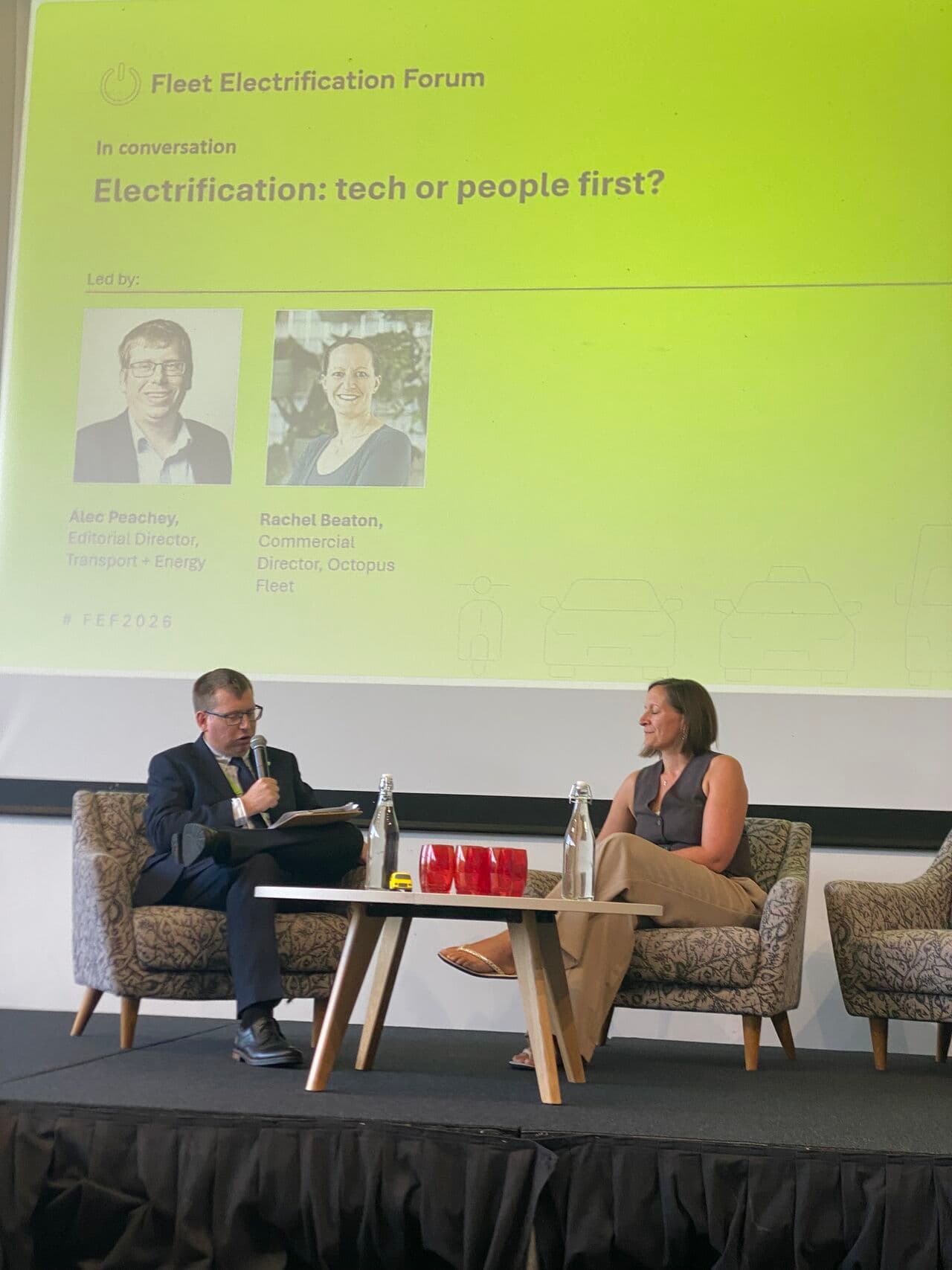
At the Fleet Electrification Forum 2026, Octopus Fleet’s Rachel Beaton joined a fireside chat where she unpicked how businesses should think about people and technology, and the roles they play in a successful fleet electrification journey.
If you missed it, here’s a write-up on her talk, and why winning hearts and minds is just as important as the technology underpinning the transition.
Fleet Managers have become a change management role now
Fleet management has evolved far beyond vehicle logistics and fuel receipts. Successfully transitioning to an EV fleet requires winning over "hearts and minds" from day one across the entire business, and it’s not just the drivers. Finance, procurement, and operations need to be brought onto this journey too.
The risk is that if stakeholders or drivers form a negative opinion of EVs early in the process because they weren’t consulted, it becomes incredibly difficult to change their perspective later. Early, transparent engagement is critical.
It's okay for fleet electrification to start out small
A massive number of businesses get completely stuck at the starting line because the scale of the transition feels overwhelming. Rachel's core advice is to simply begin and keep goals realistic as you’re navigating the shift. “A lot of fleets actually get stuck right at the start,” Rachel said, adding that “getting everybody in a row is quite challenging”.
Because a full EV rollout doesn't happen overnight, fleets need tools that handle the transition phase as a lot of businesses are finding themselves managing both ICE and EVs whilst navigating the transition. A mixed charging strategy, consisting of home charging reimbursement, depot and public charging covers your EVs, but for vehicles on the road that aren’t electric, there is still a need for fuel cards to keep these moving. Finding products for both needs that work harmoniously together helps simplify this phase.
Fleet data and insights are your best friend
Keeping stakeholders aligned requires continuous communication powered by great data. “It’s having all of the data, getting the right data in front of the right person, and then stitching that story together” Rachel states. Fleet managers need to translate that data into a narrative that addresses what businesses actually care about, such as reducing Scope 1 emissions, rather than just thinking about regulatory mandates like the ZEV mandate.

The fleet technology is ready, but your team's experience matters
The underlying EV and charging technology is mature and fully capable of supporting business infrastructure. The real bottleneck isn't the hardware; it's ensuring your people have the confidence and tools (like simple home reimbursement and a massive public charging network) to use it effortlessly.
“Ultimately, it’s probably making sure that the two evolve together,” Rachel concludes. “The technology is there to enable transition, but ultimately it is the people in our organisations that will deliver it.”
Ready to future-proof your fleet?
We're working with companies of all sizes to make their fleet electrification a breeze. We can guide your journey to electric and put people and tech at the heart of the transition.

Frequently asked questions
What is the biggest hurdle in an EV fleet transition?
Surprisingly, it’s not the technology! While things like range and charging infrastructure used to keep fleet managers up at night, the tech is officially mature and ready. Today, the biggest hurdle is change management. If you don't engage your drivers, finance team, and operations crew from day one, getting them on board later is an uphill battle. Winning "hearts and minds" early is the real secret to a smooth rollout.
How can we manage a mixed fleet during the transition to electric?
Going green doesn't happen overnight, which means you’ll likely be managing both internal combustion engine (ICE) and electric vehicles at the same time. To keep things from getting messy, you need tools that work nicely together.
For example, our Visa-backed Fleet Card keeps your remaining petrol and diesel vehicles moving seamlessly while you transition. Meanwhile, your new EVs can easily tap into our Electroverse public charging network of over 1.4 million chargers, keeping your entire mixed fleet tracked in one place.
How does home charging reimbursement work for EV fleet drivers?
We believe public charging shouldn't be your only option. With our home reimbursement system, your drivers can plug in their fleet EVs at home on any energy tariff they choose. Our platform automatically tracks their charging data and handles the reimbursement directly, taking the admin headache off the fleet manager's plate and keeping the driver experience delightfully simple. Check out our blog on how it works!