
The ultimate guide to EV incentives and grants for businesses

At a glance: The quick version
UK businesses can significantly lower the total cost of ownership of an electric fleet by leveraging government funding and tax exemptions, including the Workplace Charging Scheme (offering up to £500 per socket) and zero-emission vehicle grants.
Navigating these EV incentives for businesses allows organisations to reduce their corporation tax through First Year Allowances and benefit from highly favourable Benefit-in-Kind (BIK) tax rates of just 4% for the 2026/27 tax year.
Read on to see the exact eligibility criteria and application deadlines for each grant 👇

Although it can seem like uncertain times in the world of fleet electrification, there’s still many mandates around to help boost an EV future.
Back in September 2023 the government unveiled the zero emission vehicle (ZEV) mandate which requires 80% of new cars and 70% of new vans sold in Great Britain to be zero emission by 2030, increasing to 100% by 2035.
There’s been chatter in the UK around the realistic expectations of the aims of the mandate. Earlier this year, flexibility was added to boost how achievable fleet electrification could be - extending ICE and hybrid sales to 2035.
The message remains strong - the switch to EVs is here to stay with fleet electrification becoming the inevitable step forward for businesses.
Despite their reputation for being expensive, electric vehicles are becoming increasingly affordable for businesses. When you take into account the total cost of ownership - meaning the upfront cost plus the running costs of the vehicle - EVs often come out on top in terms of affordability as a fleet option.
Not only are EVs overall cheaper to run, there’s also plenty of schemes available to help boost your budget! We’ve rounded up all of the EV incentives, initiatives and grants available to your business so you can get the most support on your transition to electric.
Grants for prep work, including purchasing and installing a charge point
The Workplace Charging scheme
The workplace charging scheme grant is aimed at reducing the cost of purchasing hardware and its installation.
The scheme will cover up to 75% of total costs but you will be capped at:
£500 per socket
40 sockets across all sites by applicant. If you have 40 sites you will be limited to 1 per site.
For the workplace charging scheme there is no employee number cap and it is open to all eligible businesses, charities, public sector organisations and small accommodation businesses.

Let’s talk eligibility! To get approved for the workplace charging scheme you should:
You must either own the property or have permission from the landlord to install the charge points at the sites listed in the application
Your site will need to have dedicated off-road parking that is clearly associated with the premises.
You must be able to provide evidence that the parking is for your staff or fleet, not for customer use. It must be either on-site or a reasonable distance from the place of work.
OZEV-approved equipment and installers must be used for the work. You can find a list of approved equipment here, and installers here.
The Workplace Charging Scheme is aimed to support smaller business fleets, and is kicking about for another year! Get your savings before March 2027.
Depot Charging Scheme
Fleet electrification is getting a boost from the UK government with this updated grant specific for fleets. With up to £1 million per organisation up for grabs, this scheme looks to break the ground in charging infrastructure for the fleet industry. Intended for high capacity charging, this works for fleets looking to expand their EVs into the hundreds (and thousands).
This scheme is new from 1st April 2026 thanks to the UK government's £1 billion boost for fleets' EV purchases and charging. This new policy is here to address the issues of upfront cost and charging availability for fleets. Check out our Linkedin post for our take on this new policy.
Grants for the purchase of an electric vehicle
The plug-in grant
Some of you legacy EV drivers might remember the plug in car grant. Launched in 2011 it offered a discount of up to £5,000 when buying a new zero-emission car. While this grant was a huge success, EV registrations jumped from under 1,000 to hitting the 100,000’s per year, it came to an end in 2022.
Fleet managers can breathe a sigh of relief however as the government continues to incentivise businesses to go green. The grant you receive will depend on the size of vehicle you’re eyeing up, so let’s take a look:
For smaller vans
Eligibility: You could receive a discount of up to £2,500. This covers vans weighing less than 2,500kg with CO2 emissions under 50g/km. They should also have a range of at least 60 miles.
Eligible vehicles:
Citroën ë-C3 Van
Dacia Spring Cargo
Fiat e-Doblo
Ford e-Transit Courier (trend)
Ford e-Transit Courier (limited)
Ford Transit Connect PHEV Short Wheel Base Van
Ford Transit Connect PHEV Short Wheel Base FlexCab
Maxus eDeliver 3 (short wheel base variants)
Mercedes eCitan
Nextem Orca
Nissan Townstar
Peugeot e-Partner
Renault Kangoo E-Tech
Renault Kangoo E-Tech (medium wheel base versions)
Toyota Proace City Electric
Vauxhall Combo-e
Volkswagen Caddy Cargo eHybrid Panel Van
For larger vans
Eligibility: You could receive a discount of up to £5,000. This covers vans weighing between 2,500kg and 4,250kg with CO2 emissions under 50g/km. They should also have a range of at least 60 miles.
Eligible vehicles:
BD Auto eTraffic
BD e-Boxer
BD e-Ducato
BD e-Relay
Citroën e-Dispatch
Citroën e-Relay
DFSK EC31
DFSK EC35
Farizon SV
Fiat e-Ducato
Fiat E-Scudo
Ford E-Transit (Leader)
Ford E-Transit (Trend)
Ford E-Transit Custom (Limited)
Ford E-Transit Custom (MS-RT)
Ford E-Transit Custom (Sport)
Ford E-Transit Custom (Trend)
Ford E-Transit (Leader) Enhanced Range
Ford E-Transit (Trend) Enhanced Range
Ford Transit Connect PHEV Long Wheel Base Van
Ford Transit Connect PHEV Long Wheel Base FlexCab
Kia PV5 Cargo
Iveco eDaily
LEVC VN5
MAN eTGE
Maxus eDeliver 3
Maxus eDeliver 3 LWB Chassis Cab
Maxus eDeliver 5
Maxus eDeliver 7
Maxus eDeliver 9
Maxus eDeliver 9 MC L3 Chassis Cab
Maxus eDeliver 9 LC L4 Chassis Cab
Maxus E Terron 9 Luxury
Maxus E Terron 9 Premium
Maxus T90
Mercedes-Benz eVito
Mercedes-Benz eVito Premium
Mercedes-Benz eVito Progressive
Mercedes eSprinter
MW Motors Spartan EV 2.0
Nissan Interstar-e
Nissan Townstar Crew Van
Nissan Townstar L2
Peugeot e-Boxer
Peugeot e-Expert
Promod L City
Renault Kangoo E-Tech (long wheel base and crew van versions)
Renault Master E-Tech (panel and conversions)
Renault Trafic E-Tech
Renault Trucks Master ZE
Toyota Proace Electric
Vauxhall Movano
Volkswagen Caddy Cargo eHybrid Panel Van Maxi
Volkswagen E-Transporter Kombi
Volkswagen E-Transporter Panel Van
Volkswagen ID. Buzz Cargo Commerce
Volkswagen ID. Buzz Cargo Commerce Plus
Wheelchair Accessible Vehicles (WAVs)
Passenger vehicles, also known as M1 vehicles, that have been converted into wheelchair accessible vehicles are also deemed eligible for the plug-in grant. The discount amount is up to 35% with a maximum amount of £2,500.
The converted WAV should be completely zero-emission with a range of at least 70 miles. The cost of the vehicles, not including conversion costs, should total less than £35,000. The vehicles that have been outlined by the government to be eligible are:
Citroen e-Berlingo
Citroen e-Spacetourer Business M
Citroen e-Spacetourer Business XL
Peugeot e-Rifter
Vauxhall Vivaro-e Life - Combi
Trucks
Similar to vans, the discount you get on a truck will be relative to its size! With the recent update in UK policy, these vehicles can see discounts of up to 40%!
Small trucks, which weigh between 4,250kg and 12,000kg and have an EV range of at least 60 miles, are eligible for up to £16,000 off. For larger trucks, those over 12,000kg and often referred to as N3 vehicles, the grant is up to a whopping £81,000.
Eligible Vehicles:
Smaller Trucks
FUSO eCanter 4S15e with M battery (Incomplete)
FUSO eCanter 4C15e with M battery (Incomplete)
FUSO eCanter 7C18e (Incomplete)
FUSO eCanter 9C18e (Incomplete)
Iveco eDaily
Magtec MEV75 (Incomplete)
Paneltex Z75
Rightech RT75
Tevva T7 – T133 (Incomplete)
Yutong TE7 (Incomplete)
Larger trucks
Electra eCargo SEIV12-220 (Incomplete)
Electra e-Compact
Electra e-Star 27-350
DAF XB Electric Rigid (Complete)
DAF XB Electric Rigid (Incomplete)
DAF XD Electric 4x2 Rigid (Complete)
DAF XD Electric 4x2 Rigid (Incomplete)
DAF XD Electric 6x2 Rigid (Complete)
DAF XD Electric 6x2 Rigid (Incomplete)
DAF XD Electric 4x2 Tractor Unit (Complete)
DAF XD Electric 4x2 Tractor Unit (Incomplete)
DAF XF Electric 6x2 Rigid (Complete)
DAF XF Electric 6x2 Rigid (Incomplete)
DAF XF Electric 4x2 Tractor Unit (Complete)
DAF XF Electric 4x2 Tractor Unit (Incomplete)
Dennis Eagle E-Collect RCV
Magtec IVECO ML180E25/FP (Incomplete)
Mercedes-Benz eActros 300/400 Rigid 4x2 (Incomplete)
Mercedes-Benz eActros 300/400 Rigid 6x2 (Incomplete)
Mercedes-Benz eActros 300 Tractor 4x2 (Incomplete)
Mercedes-Benz eActros 300 Tractor 4x2 (Complete)
Mercedes-Benz eActros 600 Tractor 4x2 (Incomplete)
Mercedes-Benz eActros 600 Tractor 4x2 (Complete)
Mercedes-Benz eEconic (Incomplete)
Renault Trucks D-Range
Volvo FE 6x2 (Incomplete)
Volvo FH 4x2 Electric Tractor
Volvo FH, FM 4x2 Rigid (Incomplete)
Volvo FH, FM 6x2 Rigid (Incomplete)
Volvo FH, FM 6x4 Rigid (Incomplete)
Volvo FH, FM 8x4 Tag Rigid (Incomplete)
Volvo FH, FM 6x2 Tractor
Volvo FH, FM 6x4 Tractor
Volvo FL 4x2 (Incomplete)
Volvo FM 4x2 Electric Tractor
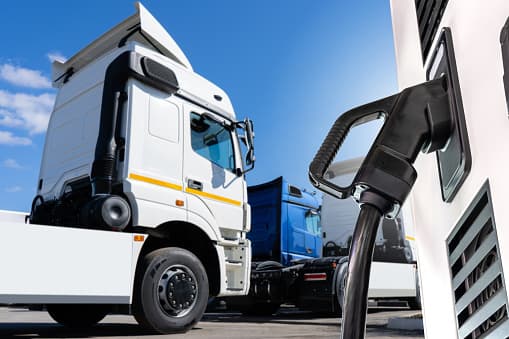
Grants are also available for mopeds, motorcycles and taxis. You can see a full list of eligibility criteria and find out how to apply here.
Zero Emissions Truck and Van grant
Another one in the 2026 rollout - there's now specific grants for HGVs and vans. Fleets are the focus of these new grants and you could see up to 40% savings off the cost of a new EV. The new grants offer up to £81,000 on some of the heaviest vehicles. If we're talking Total Cost of Ownership, EVs look pretty good!
Check out the UK press release for more details.
Additional Incentives
Lower benefit-in-kind tax
Benefit-in-kind tax is payable on cars provided to employees by businesses for both work and personal use.
This tax rate is currently decided by the level of Co2 emissions the car emits. For EVs the benefit-in-kind rate is currently set at 3% for 2025/26, increasing to 4% in 2026/27. It’ll cap at 9% by 2029/30.
Hybrids are more costly than EVs but for petrol or diesel the rate is usually 10 times what an electric car driver would pay!
To calculate how much you will pay in benefit-in-kind you will need a few things:
The rate applicable to the car
The cars P11D value (the sale price minus VAT and registration)
Your own income tax bracket
Let's look at two examples!
For an electric car with a P11D value of £35,700 and a benefit-in-kind rate of 3%, given to an employee in the 20% tax bracket, that employee will pay £225.00 a year.
For a diesel car valued at £35,700 that has a Benefit-in-Kind rate of 37%, given to an employee in the 20% tax bracket, that employee pays a whopping £2,641.80 a year.
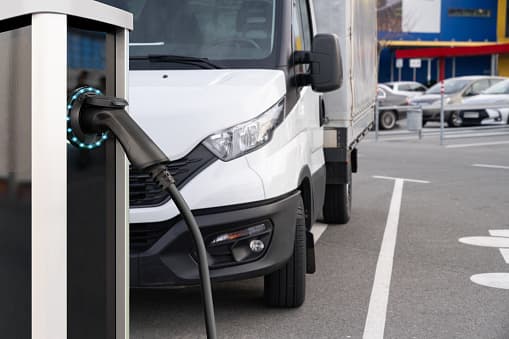
Vans are subject to a different type of Benefit-in-Kind tax which varies from zero payments to up to £4,020 for 2025/26, depending if the van is only used for business and commuting, or also used for private journeys. Electric vans currently pay a 0% tax fee - making it a tax free option!
Other benefits
Driving an electric vehicle may mean you can avail of benefits that other drivers can’t, such as:
Exemption from all fees related to London’s Ultra Low Emission Zones, which as of 2023 has expanded across all London boroughs. You are also exempt from fees related to Clean Air Zones in other cities.
Free parking in certain locations.
With solutions under Octopus Fleet, you can get access to easy charging on the go with the Electroverse app. Your drivers get the full EV experience with expert route planning and epic discounts!
Home charging solutions - so your drivers can start their day with a full charge and reduce downtime, without being out of pocket.
Want to save even more on public charging? Check out our blog on Charge Point Operator subscriptions to find out how much you could save with Octopus Fleet.

Want support in your fleet electrification journey? Check out Octopus Fleet as your partner in the electric transition.

Frequently asked questions
Are there still government grants available for business electric vehicle fleets?
Yes! While the days of the original "plug-in car grant" are behind us, there is still plenty of government support available to help businesses make the switch. From the Workplace Charging Scheme (which can cover up to 75% of hardware and installation costs) to specific Plug-in Grants for vans and trucks, the government is actively incentivising fleets to go electric.
What is the Workplace Charging Scheme?
The Workplace Charging Scheme is a government grant designed to help businesses, charities, and public sector organisations reduce the upfront cost of installing charge points. You can claim up to 75% of the total installation costs (capped at £500 per socket and 40 sockets total). It’s a brilliant way to get your depot or office ready for an EV-first future.
What is the "Total Cost of Ownership" (TCO) for EVs?
When you look at TCO, you aren't just looking at the sticker price of the vehicle - you’re looking at the fuel, tax, maintenance, and insurance over the life of the vehicle. When you factor in lower "fuel" costs (electricity vs. petrol), zero BIK tax, and the various grants mentioned above, EVs often come out as the most affordable choice for your fleet.